Many swimming traditionalists are shaking their collective heads right now. FINA, the international governing body of aquatic sports, has proposed adding 10 events to the swimming program in 2020 for the Tokyo Olympic Games. Now, this has been a hotly discussed topic for many years, as the proposed program (with the exception of the mixed relays) has been contested at the FINA World Championships since 2001 in Fukuoka, Japan. The mixed relays were added, with hefty skepticism from many, to the program for the 2015 FINA World Championships in Kazan, Russia.
• Men's 800m freestyle
• Two mixed relays (4x100m freestyle, 4x100m medley)
• Men's and women's 50m of stroke (butterfly, backstroke, and breaststroke)
Let's take a deeper dive (pun intended) into why each of the proposed events should or should not be added, shall we?
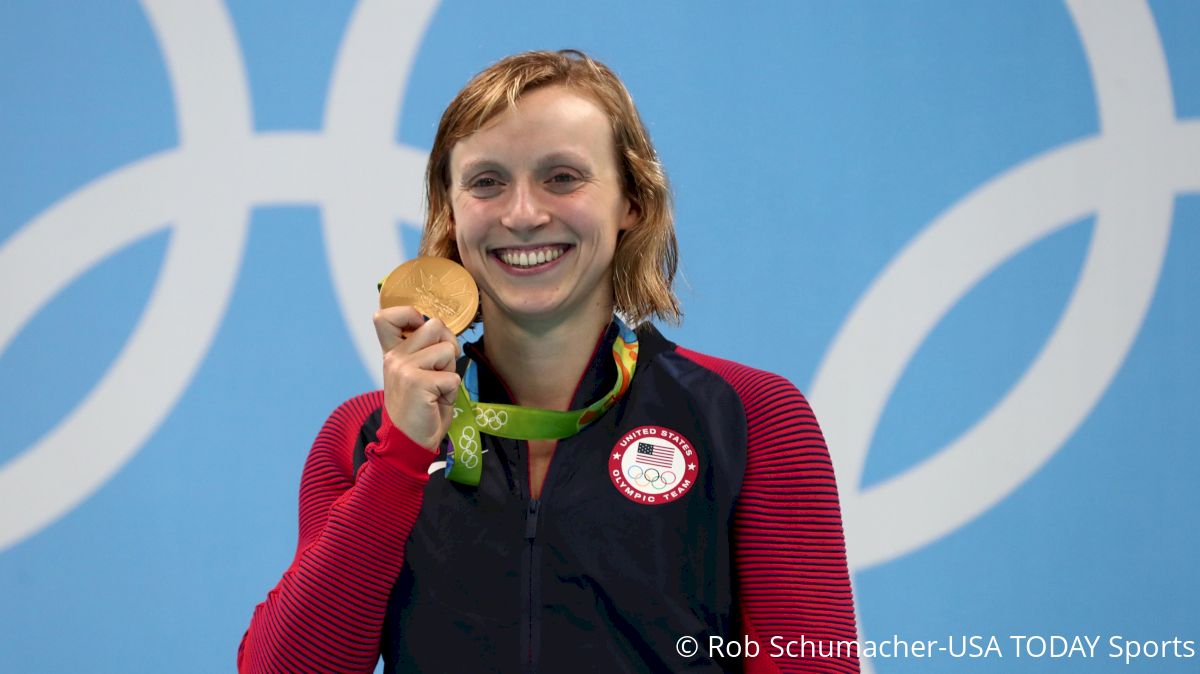
There is no telling what Ledecky is capable of dropping that down to this summer in Budapest or further down the road in 2020 if the IOC approves FINA's proposal. Ledecky is already the greatest female freestyler of all time. There is even a case to be made that she is the greatest female swimmer of all time. In a sport where career success is measured in Olympic medals, why not allow an extra opportunity for her to add to her resume? Quite frankly, it is beyond shameful that the IOC has not allowed this to be a contested event for the women at the Olympics.
Adding the 800m freestyle to the men's program would be a great opportunity to see guys such as Sun Yang, Gregorio Paltrinieri, Gabriele Detti, Mack Horton, Clark Smith, and others duke it out in another race. The interesting thing is that there is very little parity between the world's best in the men's 400m and the men's 1500m. Typically, the household names are consistent in both events. It would be interesting to see if a guy like Conor Dwyer could swim up to the 800 or a guy like Jordan Wilimovsky could swim down to it. The moral of the story: the same guys, for the most part, who are training for the 400 are also training for the 1500. Why not see who has the fortitude and capacity to swim all three in the same week? A true test of balance between mid-distance and distance swimming.
A significant amount of the issue here stems from not having any context. The women's 1500m freestyle, men's 800m freestyle, and 50s of stroke have all been contested for years in various competitions at every level of swimming. But the mixed relays have zero context as to what is fast in overall terms, aside from analyzing the individual splits from each swimmer. So when Great Britain won the inaugural 4x100 mixed medley relay in Kazan with a 3:41.71, technically a new world record, and the Unites States won the 4x100 mixed freestyle relay with a 3:23.05, also technically a new world record, swimming fans were asking themselves, "What does that really mean?"
A major component to these relays is strategy. Conventional wisdom says to put the two men on the front two legs of the medley to get clean water for the two women anchoring. But, what does a team do in the mixed freestyle relay? Does it play to its internal strengths? Does it try and strategize around the field? Who knows. At best, the mixed relays are a fun and interesting wrinkle to the program. But realistically, they are unnecessary and take away from the events that are the true focus of most world-class swimmers.
Swimming traditionalists will hold tight to the notion that 50s of stroke are a sham and do not take the same level of commitment and hard work in training to succeed as it does the other events on the program. They will say that a "real swimmer" should race up to the 100m of his or her stroke discipline.
But, let's be honest for a minute. More individual events on the Olympic program means more opportunities for one, or all, of the following three things to happen:
1.) Swimmers can earn a spot on an Olympic team -- a dream for just about every swimmer who has put on a cap and goggles.
2.) Swimmers can extend their careers and, in turn, their earning potential in the sport. Who wouldn't want to see Ian Crocker stick around for a few more years to swim a 50m butterfly? Or a guy like David Plummer be able to make another run at an Olympic team in the 50m backstroke? Sure, there are enough people out there with the raw speed and talent to "fake it until they make it," but who cares? That's just like saying Usain Bolt's unbelievable reign of dominance in the 100m dash is illegitimate, because he did not train as much as Eliud Kipchoge of Kenya, who won the men's marathon in Rio. I don't see anyone complaining about Anthony Ervin's success in the 50m freestyle comparative to his success in the 100.
In terms of earning potential, this is fairly self-explanatory. Longer careers = higher earning potential for top-tier swimmers.
3.) Swimming needs more entertainment value. At the end of they day, sport is entertainment. What is more entertaining and celebrated in football: New England Patriots quarterback Tom Brady throwing for 500 yards and five touchdowns or his center, David Andrews, making pivotal blocks throughout the game? Both of them are incredibly important and vital their team's success, but one is definitely more intriguing from a fan perspective. What is the most talked about and popular event in swimming? The 50 freestyle. So why not open a few more doors?
What do you think? Let us know.
----
More Olympic events in aquatic sports proposed by FINA, as reported on by NBC Sports on Monday:
DIVING
Proposal: to increase the number of divers from one-hundred thirty-six (136) to one-hundred sixty (160) and to have twelve (12) Synchro Teams qualified for the finals.
SYNCHRONIZED SWIMMING
Proposal: to increase the number of participating nations from eight (8) to twelve (12) in the Team Event and to add the Mixed Duet Event with twelve (12) duets, that is 24 athletes.
OPEN-WATER SWIMMING
Proposal: to increase the number of swimmers from twenty-five (25) Men and twenty-five (25) Women to thirty-five (35) Men and thirty-five (35) Women.
WATER POLO
Proposal: to increase from eight (8) to twelve (12) Women's teams but by adding four (4) additional athletes only.
Existing -- total two-hundred sixty (260) players -- 12 Men's Teams x 13 players and 8 Women's Teams x 13 players)
New proposal -- total two-hundred sixty-four (264) players for twenty-four (24) Teams (12 Women's Teams x 11 Players and 12 Men's Teams x 11 players).
HIGH DIVING
Proposal: to include High Diving as an extreme sport, where Men dive from a 27m platform and Women from a 20m platform, with a total number of thirty (30) divers (15 Men and 15 Women).
--
Proposed Added Events
• Women's 1500m freestyle• Men's 800m freestyle
• Two mixed relays (4x100m freestyle, 4x100m medley)
• Men's and women's 50m of stroke (butterfly, backstroke, and breaststroke)
Let's take a deeper dive (pun intended) into why each of the proposed events should or should not be added, shall we?
Women's 1500m Freestyle
Katie Ledecky. Do we really need another reason? The women's 1500m freestyle has been contested at the World Championships since 2001. At that time, Janet Evans was the world record-holder with a 15:52.10, which she set in 1988 at the US Nationals. Kate Ziegler, a two-time US Olympian (2004 and 2008), then dropped that world record down to 15:42.54 in 2007. Since 2013, Ledecky has lowered the world record by a remarkable 17 seconds to a 15:25.48, which she set at the 2015 World Championships in Kazan, Russia.There is no telling what Ledecky is capable of dropping that down to this summer in Budapest or further down the road in 2020 if the IOC approves FINA's proposal. Ledecky is already the greatest female freestyler of all time. There is even a case to be made that she is the greatest female swimmer of all time. In a sport where career success is measured in Olympic medals, why not allow an extra opportunity for her to add to her resume? Quite frankly, it is beyond shameful that the IOC has not allowed this to be a contested event for the women at the Olympics.
Men's 800m Freestyle
Just like the women's 1500m freestyle, the men's 800m freestyle has been contested at the World Championships since 2001. At that time, we saw a fairly significant time drop in the world record by a man from down under by the name of Ian Thorpe. The Thorpedo broke the world record at the 2001 World Championships with a sterling 7:41.59. The previous world mark was set by Kieren Perkins, another Aussie, in the 1994 Commonwealth Games with a 7:46.00. Perkins' time was set en route to breaking his own WR in the 1500 with a 14:41.66.Adding the 800m freestyle to the men's program would be a great opportunity to see guys such as Sun Yang, Gregorio Paltrinieri, Gabriele Detti, Mack Horton, Clark Smith, and others duke it out in another race. The interesting thing is that there is very little parity between the world's best in the men's 400m and the men's 1500m. Typically, the household names are consistent in both events. It would be interesting to see if a guy like Conor Dwyer could swim up to the 800 or a guy like Jordan Wilimovsky could swim down to it. The moral of the story: the same guys, for the most part, who are training for the 400 are also training for the 1500. Why not see who has the fortitude and capacity to swim all three in the same week? A true test of balance between mid-distance and distance swimming.
Mixed Relays
The mixed relays (two women and two men on the same relay) have certainly been an interesting addition to the World Championship program -- both short course meters and long course meters. First introduced at the 2015 World Championships in Kazan, the mixed relays have been met with a healthy amount of criticism. Most of the feedback from the swimming community says they are "silly" or "goofy" or simply beg the question, "why?"A significant amount of the issue here stems from not having any context. The women's 1500m freestyle, men's 800m freestyle, and 50s of stroke have all been contested for years in various competitions at every level of swimming. But the mixed relays have zero context as to what is fast in overall terms, aside from analyzing the individual splits from each swimmer. So when Great Britain won the inaugural 4x100 mixed medley relay in Kazan with a 3:41.71, technically a new world record, and the Unites States won the 4x100 mixed freestyle relay with a 3:23.05, also technically a new world record, swimming fans were asking themselves, "What does that really mean?"
A major component to these relays is strategy. Conventional wisdom says to put the two men on the front two legs of the medley to get clean water for the two women anchoring. But, what does a team do in the mixed freestyle relay? Does it play to its internal strengths? Does it try and strategize around the field? Who knows. At best, the mixed relays are a fun and interesting wrinkle to the program. But realistically, they are unnecessary and take away from the events that are the true focus of most world-class swimmers.
50m Of Stroke (Fly, Back, & Breast)
It has been a long-standing debate within the international swimming community on whether or not the 50s of stroke (butterfly, backstroke, and breaststroke) should be added to the Olympic program (similar to the debate of adding the 100 IM to the NCAA Championships).Swimming traditionalists will hold tight to the notion that 50s of stroke are a sham and do not take the same level of commitment and hard work in training to succeed as it does the other events on the program. They will say that a "real swimmer" should race up to the 100m of his or her stroke discipline.
But, let's be honest for a minute. More individual events on the Olympic program means more opportunities for one, or all, of the following three things to happen:
1.) Swimmers can earn a spot on an Olympic team -- a dream for just about every swimmer who has put on a cap and goggles.
2.) Swimmers can extend their careers and, in turn, their earning potential in the sport. Who wouldn't want to see Ian Crocker stick around for a few more years to swim a 50m butterfly? Or a guy like David Plummer be able to make another run at an Olympic team in the 50m backstroke? Sure, there are enough people out there with the raw speed and talent to "fake it until they make it," but who cares? That's just like saying Usain Bolt's unbelievable reign of dominance in the 100m dash is illegitimate, because he did not train as much as Eliud Kipchoge of Kenya, who won the men's marathon in Rio. I don't see anyone complaining about Anthony Ervin's success in the 50m freestyle comparative to his success in the 100.
In terms of earning potential, this is fairly self-explanatory. Longer careers = higher earning potential for top-tier swimmers.
3.) Swimming needs more entertainment value. At the end of they day, sport is entertainment. What is more entertaining and celebrated in football: New England Patriots quarterback Tom Brady throwing for 500 yards and five touchdowns or his center, David Andrews, making pivotal blocks throughout the game? Both of them are incredibly important and vital their team's success, but one is definitely more intriguing from a fan perspective. What is the most talked about and popular event in swimming? The 50 freestyle. So why not open a few more doors?
What do you think? Let us know.
----
More Olympic events in aquatic sports proposed by FINA, as reported on by NBC Sports on Monday:
DIVING
Proposal: to increase the number of divers from one-hundred thirty-six (136) to one-hundred sixty (160) and to have twelve (12) Synchro Teams qualified for the finals.
SYNCHRONIZED SWIMMING
Proposal: to increase the number of participating nations from eight (8) to twelve (12) in the Team Event and to add the Mixed Duet Event with twelve (12) duets, that is 24 athletes.
OPEN-WATER SWIMMING
Proposal: to increase the number of swimmers from twenty-five (25) Men and twenty-five (25) Women to thirty-five (35) Men and thirty-five (35) Women.
WATER POLO
Proposal: to increase from eight (8) to twelve (12) Women's teams but by adding four (4) additional athletes only.
Existing -- total two-hundred sixty (260) players -- 12 Men's Teams x 13 players and 8 Women's Teams x 13 players)
New proposal -- total two-hundred sixty-four (264) players for twenty-four (24) Teams (12 Women's Teams x 11 Players and 12 Men's Teams x 11 players).
HIGH DIVING
Proposal: to include High Diving as an extreme sport, where Men dive from a 27m platform and Women from a 20m platform, with a total number of thirty (30) divers (15 Men and 15 Women).
--